Põige
Year: 2023 autumn semester (II year)
Typology: Public building
Location: Tallinn, city center
The Rotermann Quarter is a symbol of one of Estonia’s most successful entrepreneurial family - the Rotermanns. The factories established by the Rotermann family provided employment and security for hundreds of Tallinn residents. Before the Second World War, the district contained some of the finest examples of various architectural styles in the city, but the vast majority of these buildings were destroyed during the Second World War. One of the few structures to retain its original form is the Rotermann Salt Storage, built in 1908.
The primary objective of the “Põige” extension to the Salt Storage, which is now occupied by Estonian Architecture Museum, is to prevent this historic building from becoming visually isolated and overshadowed by the surrounding high-rise development. The proposal also expands the building’s basement level, creates a quiet urban retreat between busy traffic corridors, and improves the pedestrian connection between Tallinn’s city centre and the harbour.
The principal pedestrian flows in this area run from Tallinn’s Old Town and the Rotermann Quarter towards the harbour, as well as from the Rotermann Quarter towards Linnahall. At present, movement along these routes is interrupted and inefficient.
To improve connectivity, the green space in front of the Rotermann Salt Storage has been divided into three zones by a series of diagonal pedestrian paths. These align with the natural desire lines of movement, creating a clear, intuitive, and fluid circulation network through the site.


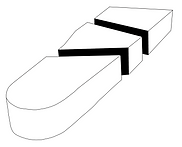
To prevent the Rotermann Salt Storage from being visually lost among the surrounding high-rise buildings, the extension pavilion is placed entirely below ground. This approach ensures that the new intervention does not compete with the historic warehouse or diminish its presence in the cityscape.
Instead, the design preserves the prominence of the Salt Storage while creating a new, green public space between busy roads affected by traffic noise and air pollution, offering visitors a calm and sheltered urban environment.
Birdseye view to the buildng
The building has two storeys , with its lowest level located 8 metres below ground. The upper underground level is directly connected to the basement of the Rotermann Salt Storage and consists of a series of elongated gallery spaces.
The galleries are oriented towards a lush, landscaped courtyard, with full-height glazed walls creating a strong visual connection to the greenery and allowing natural light to penetrate the underground interiors. A bridge links the pavilion’s northern and southern wings, providing circulation while overlooking the central courtyard.

-1. floor


Site plan
-2. floor


View from inside to the courtyard
View to the staircase leading underground

View to the courtyard